Who becomes Serbia's next prime minister?
Serbia's upcoming election created a massive market mispricing, and one candidate's own words reveal why


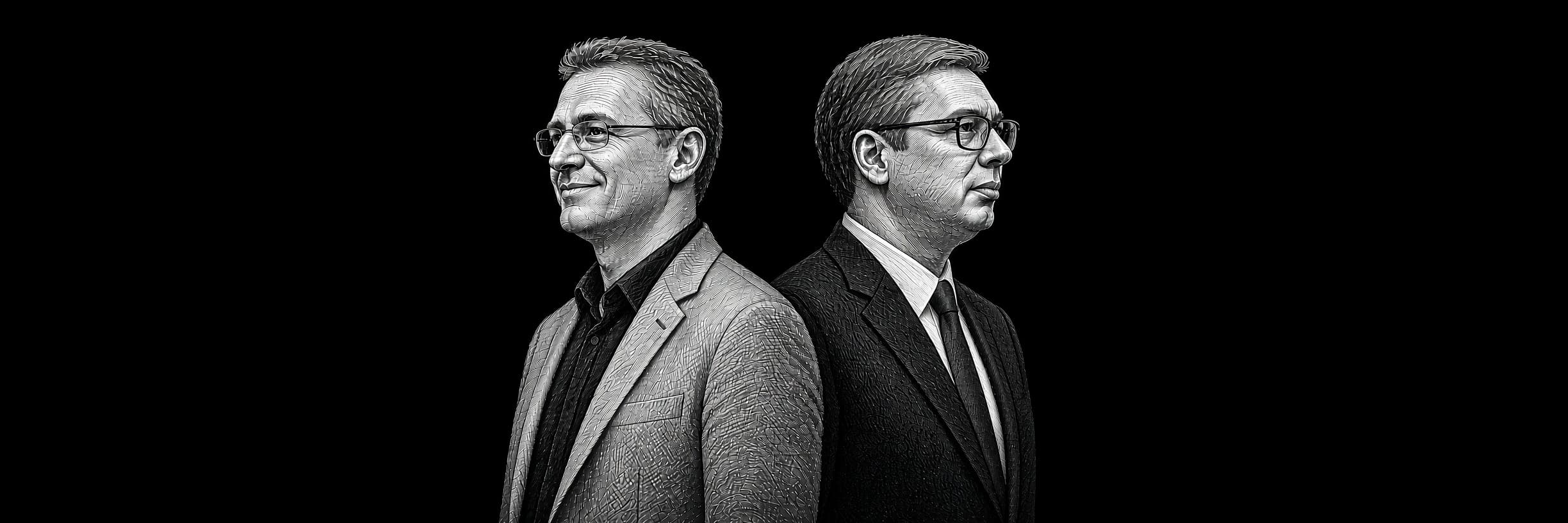
Serbia's October 25 parliamentary election looks like a two-way race, but the real question isn't who wins the vote. It is who becomes prime minister if the student protesters pull off an upset against President Aleksandar Vučić's ruling SNS party.
Polymarket's next prime minister market has already picked a favorite among the students, pricing Ilija Srdanović at 39 cents, or a 39% chance of taking the job. That price assumes the students win and then hand power to the cardiologist who tops their list. We think both assumptions are shaky, and together they make Srdanović one of the clearest "No" bets on the platform.
Vučić's camp has left no doubt about its plan. His party named him as its prime ministerial candidate on September 5, and he resigns as president on September 27 to run for it.
The students have done the opposite. They presented all 250 candidates on September 15 but named no one to lead a government. The name at the top is Ilija Srdanović, a cardiologist and professor at Novi Sad's medical school, yet he has not asked for the job. A day after the list came out, he told Serbian news site Nova he would not leave medicine, called himself "first among equals," and would not discuss his political future.
The students have more experienced and willing names to choose from if they win. Dejan Šoškić, a former governor of Serbia's central bank, is on the list. So is Vladan Đokić, the head of the University of Belgrade, who said in July he would consider political office if the students asked.
The market prices Đokić at about 4 cents, a tenth of Srdanović's price, even though Đokić has openly said he would take the job and Srdanović has said he would not. Also, a very important point: the prime minister does not have to come from the ballot at all. For example, the current prime minister, Đuro Macut, was not on it.
Even if the students pick Srdanović, they still have to win enough seats to form a government. Forming a government takes 126 of parliament's 250 seats, and the polls disagree on whether the students can get there. Faktor Plus had Vučić's party ahead 47.2% to 31.5% in a survey run into September, while an NSPM poll from late July had the students narrowly in front, 39.6% to 37.5%.
All the facts are against Srdanović winning. The 39% probability is simply too high to justify. Therefore, buying “No” at 62 cents on the “Ilija Srdanović” contract seems to be the most logical trade on the board.
This page does not constitute investing advice. Prediction markets and/or gambling may result in loss of funds. You are advised to conduct your own due diligence before taking any action.