How close does 2026 come to a 10-kiloton meteor strike?
Astronomers keep a list of every object that might hit Earth. The one most likely to arrive in 2026 is not on it.


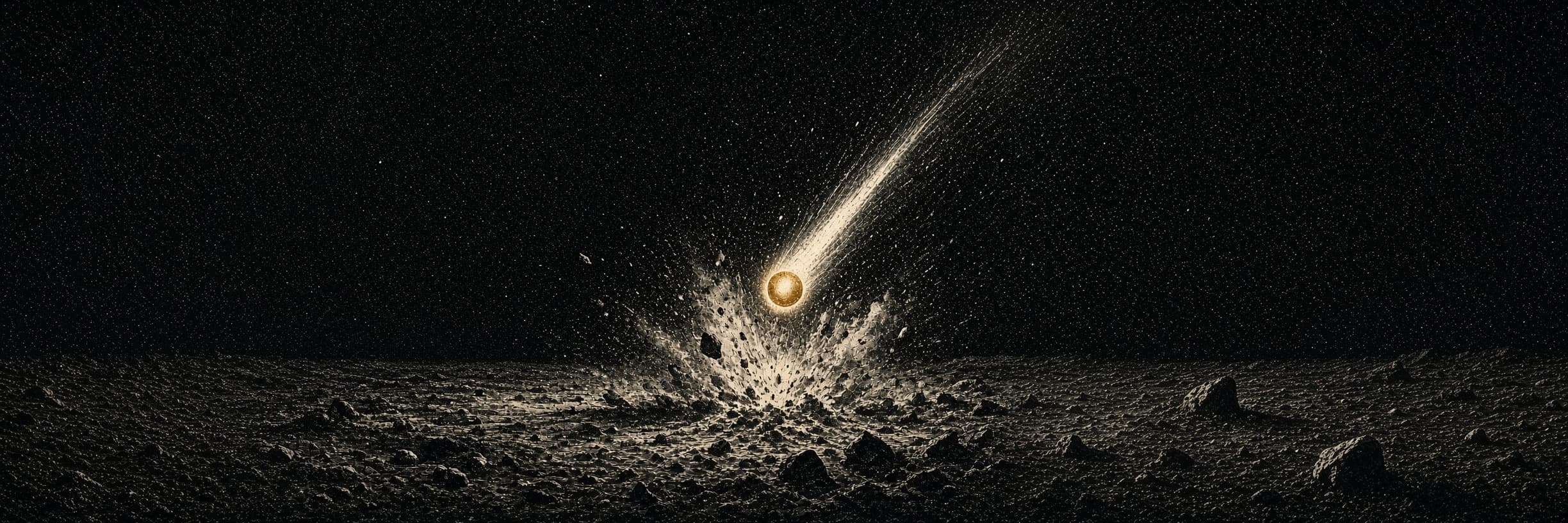
At 2:06 in the afternoon on May 30, something exploded 32 kilometers above Massachusetts Bay and released 1.1 kilotons of energy. That is the largest thing to hit Earth's atmosphere all year. It is also nine times too small to settle Polymarket's meteor market, where Yes trades at 11.5 cents.
Everything here depends on the NASA table. A natural meteoroid has to explode in the atmosphere at 10 kilotons or more between January 1 and December 31, read off the Impact Energy field of JPL's Fireball and Bolide repository. Reentering hardware does not count.
So, how likely is this? Only 12 of the 1,069 fireballs in NASA's table reached 10 kilotons, spread across 10 calendar years. Chelyabinsk in February 2013 was 441 kilotons. The next largest on the whole list is 49. 12 events in 38 years works out to 0.316 a year, and 130 days of 2026 are left, which puts the number at 10.6%. The market wants 11.5 cents, which pays the No side 13% over those 130 days.
Another, and perhaps the most important reason a 10-kiloton meteor strike is unlikely is that Sentry tracks 2,184 objects with a nonzero chance of hitting Earth, and the five whose windows include this year sum to roughly 0.02%.
This page does not constitute investing advice. Prediction markets and/or gambling may result in loss of funds. You are advised to conduct your own due diligence before taking any action.