Can the Rubin Observatory find a fourth interstellar object by the end of 2026?
The discovery of 3I/ATLAS made it the third confirmed object from another star system, raising the question of how soon a fourth will appear


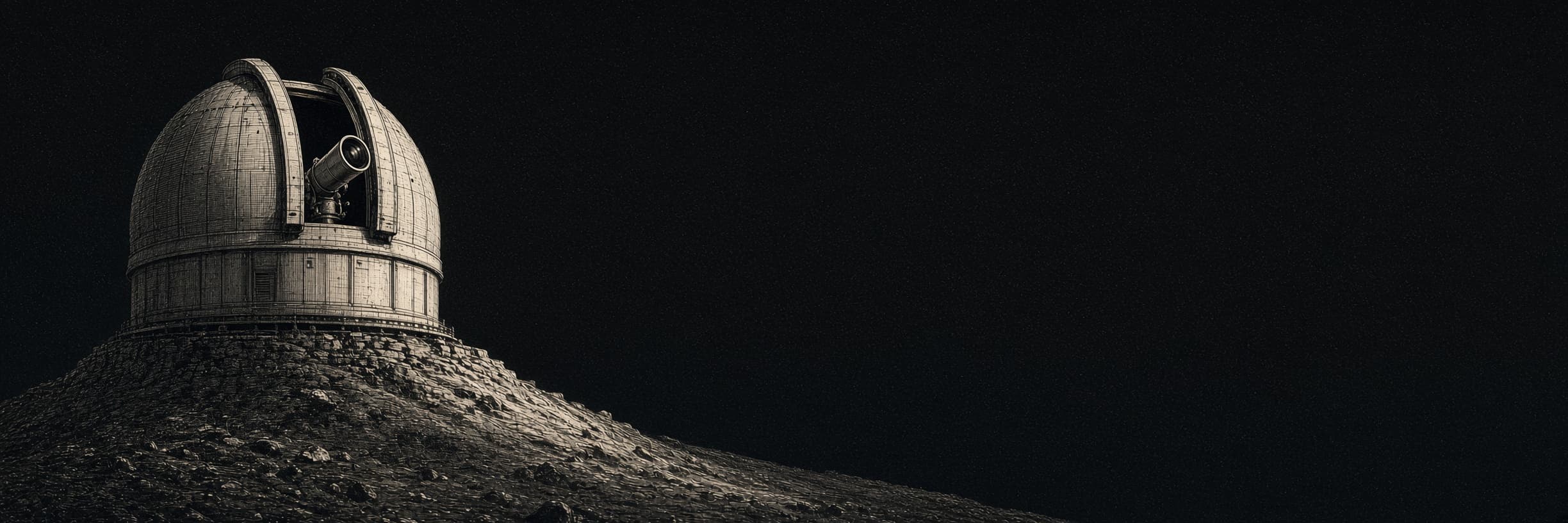
3I/ATLAS, a comet that came in from outside the solar system, was discovered on July 1, 2025, by a NASA-funded survey telescope in Chile and confirmed as interstellar the next day. It is still being tracked on its way back out. It is also only the third such object anyone has ever confirmed, after 1I/'Oumuamua in October 2017 and 2I/Borisov in August 2019. Now, Kalshi traders are betting on whether a fourth is confirmed before January 1, 2027.
The thing is that confirmation is a measurement. An object's orbit gets a number called eccentricity, and anything above 1 is not bound to the Sun. 3I/ATLAS came in at 6.28 and was designated in about a day. Borisov took 25 days, while 'Oumuamua took 18.
Three objects in nine years works out to one every three years. Over the 4 months left in this market, that gives roughly a 10% chance, which is close to what the contract costs at the time of writing this.
The only bull case is the Vera C. Rubin Observatory, which began its ten-year Legacy Survey of Space and Time on June 29, 2026. Published estimates of what it should find run from about five interstellar objects a year to as many as 70. On this note, the actual probability should be closer to 79%.
However, Rubin has confirmed nothing in its first 10 weeks, and its one candidate, flagged in April and May data, was withdrawn in June after its own solar system team said the interstellar link was almost certainly not a real object.
Plus, confirming the findings typically takes a lot of time. Confirmation means enough measurements that the orbit cannot still be a normal solar-system path. If the object is screaming through, like 3I, sure, that can take a day. But if it is only barely too fast to be bound, you need two to three weeks and a pile of observations. Thus, anything found after mid-December may not be designated in time.
Still, we think the new telescope is much more likely to find an interstellar object by the end of the year than the market prices currently suggest. At 30 cents, 'Yes' returns 233.33%, so it's an asymmetric bet too.
This page does not constitute investing advice. Prediction markets and/or gambling may result in loss of funds. You are advised to conduct your own due diligence before taking any action.