As France burns, traders bet on a state of emergency
Curfews are now in force as France struggles to contain violent unrest. Still, traders stay skeptical that the crisis will trigger emergency powers.


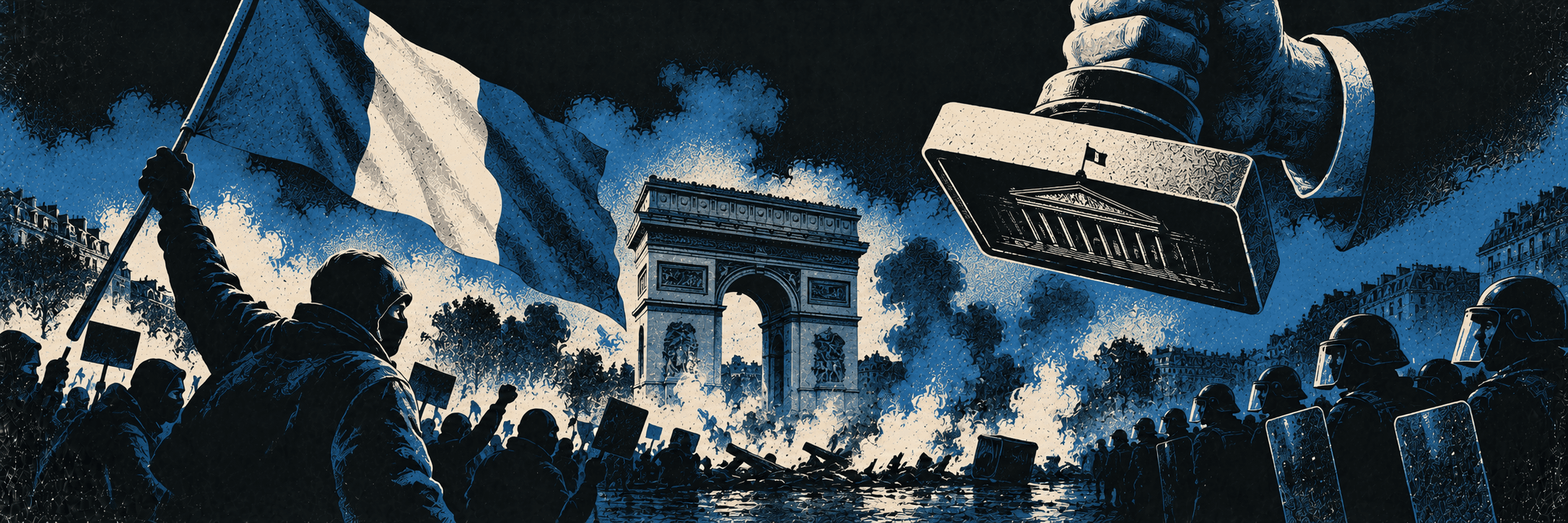
After a weekend of violent unrest, France has decided to impose localized curfews on its streets. Nonetheless, Polymarket traders are still giving a formal state of emergency relatively low odds.
At the time of writing (Tuesday, noon UTC), the market is pricing in an 8% chance of a state-of-emergency declaration by October 31, down 42% from its high two days ago, as well as a 17% chance by December 31, down 34% in the same period.
This is despite the government’s acknowledgement that the situation could escalate. And if that were to happen, it would happen fast.
The market has attracted more than $144,000 in trading volume since launching on October 18, as several buildings in several cities burned when France’s political crisis violently clashed with growing public anger over living costs and public services.
Curfews first, emergency powers later?
On Monday, October 19, French authorities officially announced curfews in parts of Paris and several other cities as a response to riots, looting, building burning, and clashes during this latest round of anti-government protests. While it began in mid-September with student demonstrations over school conditions, it turned into nationwide protests and escalated into violence on October 17.
The unrest has placed significant added pressure on President Emmanuel Macron’s government. More than 2,500 people have been arrested, and the cities face extensive damage that will need repairing. Interior Minister Laurent Nuñez admitted that law enforcement had "lost control" in major cities over the weekend, but Macron refused his resignation.
Importantly, the first night under curfew passed without major incidents. Prime Minister Sébastien Lecornu didn’t rule out declaring a state of emergency but said that further restrictions would be imposed where necessary.
That said, it seems that the government is trying more targeted restrictions first. In that case, further escalation could lead to the use of emergency powers.
Still, as said, traders don’t buy it. And it’s likely due to an important distinction: curfews do suggest that the government is indeed tightening its response, but it doesn’t mean these measures will be insufficient, aka, they don’t automatically mean a nationwide state of emergency is imminent.
This comes down to one question: if demonstrations intensify, will the current measures hold? And the next test could come already on October 24, when organizers have called for further protests.

This page does not constitute investing advice. Prediction markets and/or gambling may result in loss of funds. You are advised to conduct your own due diligence before taking any action.