How $1,000 turns into $9,090 on a single Fed decision
Half the FOMC still expects to be easing by December, and the market prices that outcome at 11 cents on the dollar
.jpg&w=3840&q=75)
Polymarket's Fed rate cuts market has spent seven months burying the 2026 rate cut, and zero cuts now trades at 84.5 cents after a 69-point run. On the other hand, one cut sits at 11, two cuts at 3, and three cuts at 1.2. The crowded side of that board risks 84.5 cents to make 15.5 by December 31. But the abandoned side risks 11 cents to make 89, and pays 809% if the Fed blinks a single time.
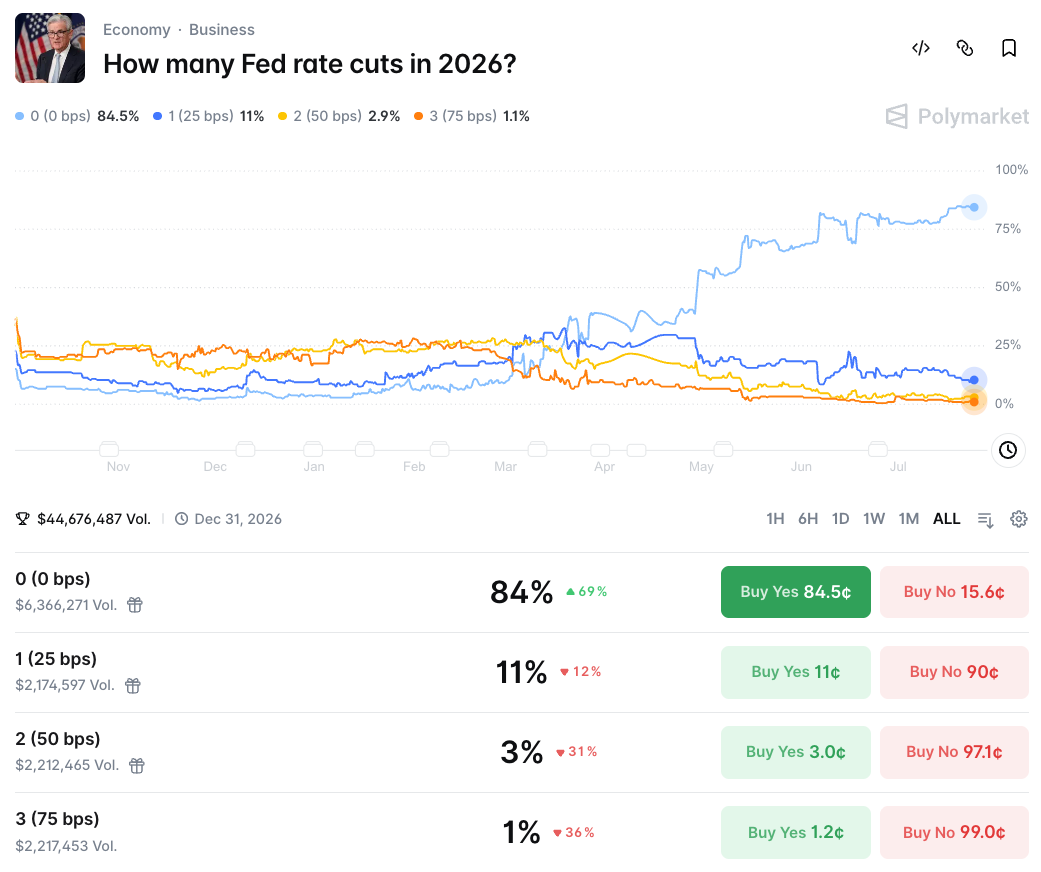
So is one cut actually possible?
In June, the Fed said two different things at once. Kevin Warsh, the new chairman, kept rates at 3.50 to 3.75% at his first meeting on June 17, and 9 of the 18 officials who vote said they expect rates to be higher by December. The others expect rates to be at, or a little below, where they are now by the end of the year. A little below means a cut. So, they are evenly split on which way to move. The market is charging 84.5 cents as though only one half of that room existed.
The jobs numbers are the reason the other half might win the argument, because a weakening job market is the one thing that makes this Fed cut. In June, the economy added 57,000 jobs when forecasters expected 115,000. The government also went back and said April and May had been worse than first reported, by 31,000 and 43,000 jobs.
Unemployment stayed at 4.2%, which sounds healthy, but you are only counted as unemployed if you are actively looking for work. Convenient, isn't it? In June, the share of adults working or looking fell to 61.5%, so some of the people who would have pushed unemployment higher left the count instead. The rate held steady for a bad reason.
If the Fed does move, it likely moves once. Four meetings are left, and next week's on July 29 is close to a formality, with markets giving it about a 74% chance of no change. That leaves September, October, and December.
The thing that ruins this is oil. Crude above $90 a barrel is pushing prices up across the economy, and while that lasts, Warsh has every excuse to sit still or even raise. Oil is also the fastest price in the economy to fall back down. Of course, none of this makes a cut certain. It's just that a cut is likelier than 11 cents implies, and if it comes, it pays back 809%. And asymmetric bets are always better than non-asymmetric ones.
This page does not constitute investing advice. Prediction markets and/or gambling may result in loss of funds. You are advised to conduct your own due diligence before taking any action.